

Can Invisalign® Fix a Crossbite?
Yes, in many cases Invisalign® clear aligners can correct a crossbite, especially when the problem comes from tooth position. A crossbite caused by a narrow jaw may need more, so an exam with Dr. Mergen, our Iowa City and Coralville, IA orthodontist, is the best first step.
Here's what you need to know about crossbites and clear aligners.
What Is a Crossbite?
A crossbite happens when upper teeth bite on the wrong side of the lower teeth. The American Association of Orthodontists describes .
- Posterior crossbite: upper back teeth sit inside the lower back teeth.
- Anterior crossbite: one or more upper front teeth sit behind the lower front teeth.
- Buccal crossbite: upper back teeth bite fully outside the lower teeth.
A crossbite can affect one tooth or a whole side of the mouth. It often shows up in childhood, but many adults live with one for years.
Why a Crossbite Is Worth Treating
A crossbite is more than a cosmetic concern. The AAO notes it can lead to the jaw shifting to one side, lopsided jaw growth and extra wear on tooth enamel.
Teeth that hit at the wrong angle also take uneven pressure when you chew. Over time, that can make the bite feel off and harder to keep clean.
What Invisalign Can Do for a Crossbite
Each set of aligners moves teeth in small, planned steps. When the crossbite comes from teeth that are tipped or crowded out of line, aligners can guide them back over the lower teeth.
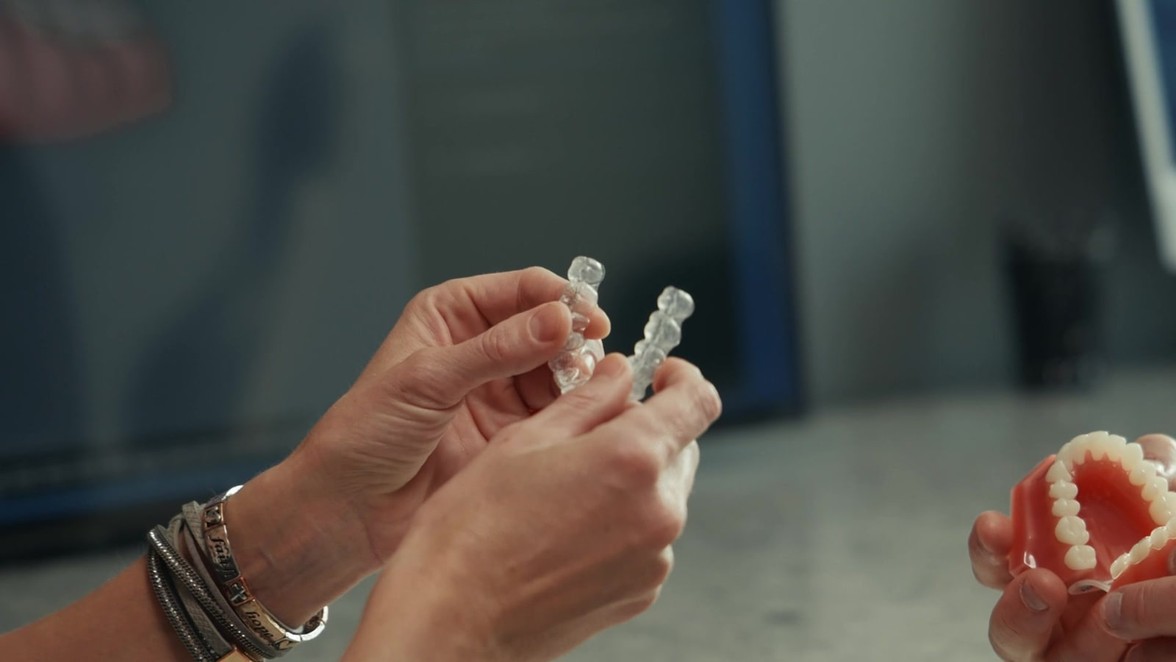
Small tooth-colored attachments on your aligners give the trays extra grip for these movements. Aligners can also widen a narrow arch of teeth a little at a time, which helps many posterior crossbites.
Crossbites often travel with other bite problems. We cover those in Invisalign for overbites and bite issues.
When Aligners Alone May Not Be Enough
Some crossbites come from the jaw itself, not just the teeth. The AAO says a growing patient with a narrow upper jaw may need a palatal expander, often paired with braces or aligners.
Dr. Mergen focuses on catching these problems early, while the jaw is still growing. For many children, Invisalign First™ can guide growth and often removes the need for bulky appliances like expanders.
For adults with a severe skeletal crossbite, jaw surgery is sometimes the best answer. Our practice also offers braces, and you can compare every option on our orthodontic treatment options page.
Why Earlier Is Easier for Kids
The AAO recommends a first orthodontic , and it names an anterior crossbite as a problem worth correcting early. A young jaw responds to gentle guidance much more readily than an adult jaw.
Our preventive orthodontic treatment page explains how we approach early care. You can also read why early orthodontics matters for a growing bite.
How Dr. Mergen Plans Crossbite Treatment
Results with Invisalign depend a great deal on the orthodontist's experience. Dr. John Mergen holds Top 1% VIP Diamond Plus Invisalign provider status in North America.
He uses digital X-rays and 3D imaging to see whether a crossbite comes from the teeth, the jaw or both. That answer shapes whether aligners alone will work or another step comes first.
Frequently Asked Questions
Is a crossbite the same as an underbite?
No, they are related but different. In an anterior crossbite, one or more upper front teeth sit behind the lower front teeth.
In an underbite, all of the upper front teeth or the whole upper jaw sits behind the lower teeth. An underbite more often involves jaw position, so it may call for a different plan than a single-tooth crossbite.
What causes a crossbite?
A crossbite can run in families, and genetics play a large role in jaw size and shape. Baby teeth that fall out late or adult teeth that come in at an odd angle can also push teeth out of line.
Long-term habits like thumb sucking or an unusual swallowing pattern put steady pressure on the teeth and jaw. That pressure can shift teeth and even change how the bone develops.
What age should a child be checked for a crossbite?
The AAO recommends a first orthodontic visit by age 7, when many bite problems are easier to spot. At Mergen Orthodontics, we like to start interceptive treatment between the ages of 6 and 9.
Starting in that window helps make room for permanent teeth and can prevent bigger problems later. If you notice your child's jaw shifting to one side when they bite, an early visit is a smart step.
Can an adult fix a crossbite without surgery?
Many adults can, especially when the crossbite comes from tooth position rather than jaw size. Invisalign treatment for adults can move teeth and improve how the upper and lower teeth meet.
Our practice recommends jaw surgery only as a last resort. When a severe skeletal crossbite does need it, Dr. Mergen works closely with an oral surgeon and oversees the orthodontic care before and after the procedure.
What happens at a first crossbite visit with Mergen Orthodontics?
Your first visit starts with a complimentary smile assessment. It includes an office tour, a thorough exam, digital X-rays and 3D digital imaging of your teeth.
Dr. Mergen then sits down with you for an in-depth consultation about your bite and your options. Our team will also answer questions about our offices, treatment choices and flexible payment options.
Schedule a Crossbite Consultation
A crossbite rarely fixes itself, but the right plan can correct it comfortably. Call our Iowa City office at (319) 688-0800 or our Coralville office at (319) 626-2142, or request an appointment online.
Find out whether Invisalign for crossbite correction fits your smile with our experienced Invisalign orthodontist.